Hasan Ali ÇOLAK Air Conditioning and Refrigeration Technician
If your radiators are not heating efficiently, we recommend reading our article on Radiator Not Heating Issues.
Radiator Connection Types
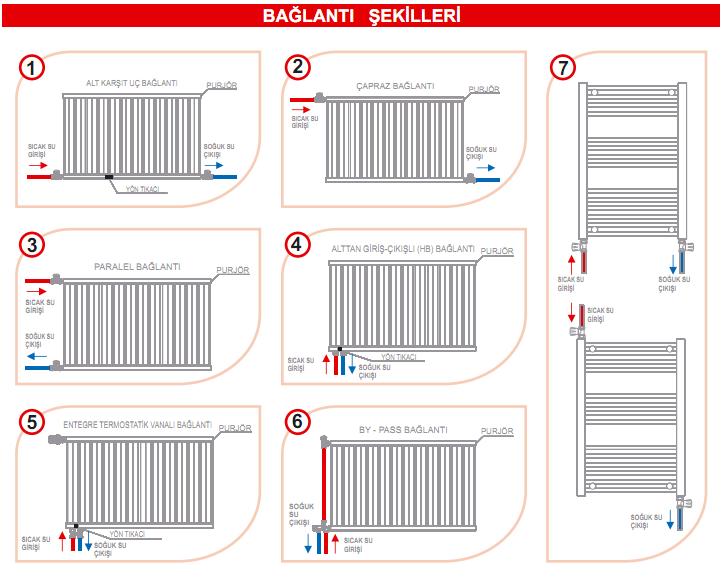
The images above illustrate different radiator connection types. Any connection outside of these is referred to as a reverse connection, which often leads to issues. In the diagrams, the red color represents the radiator’s hot supply line, while the blue color indicates the cold return line.
How to Detect a Reverse Radiator Connection?
Radiator Connection Type 1
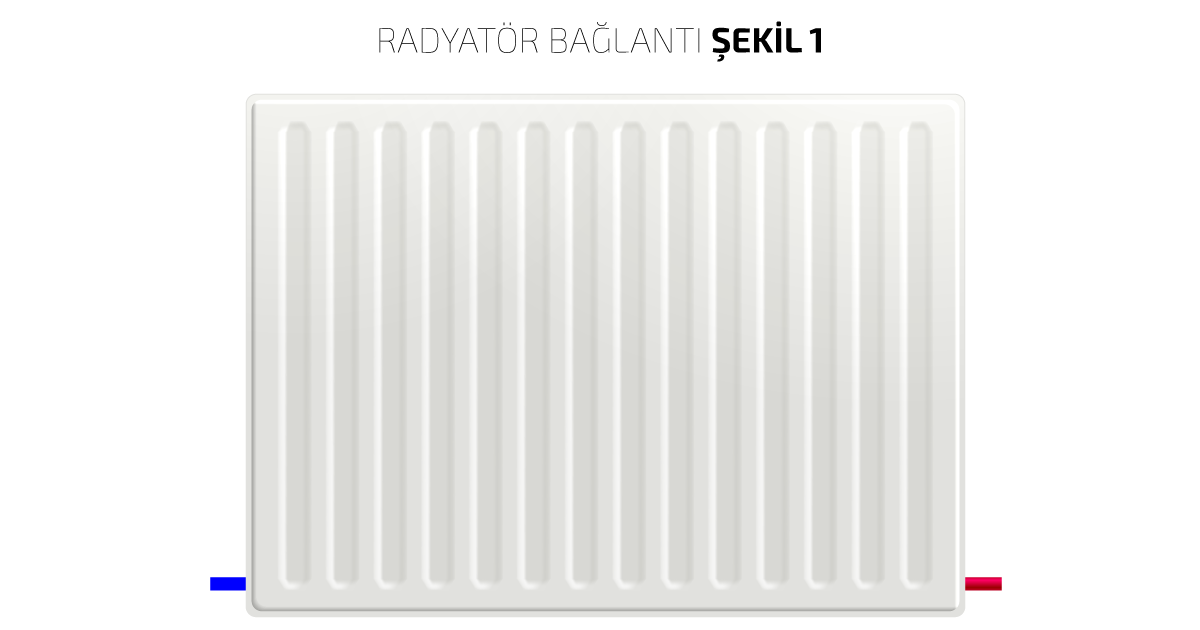
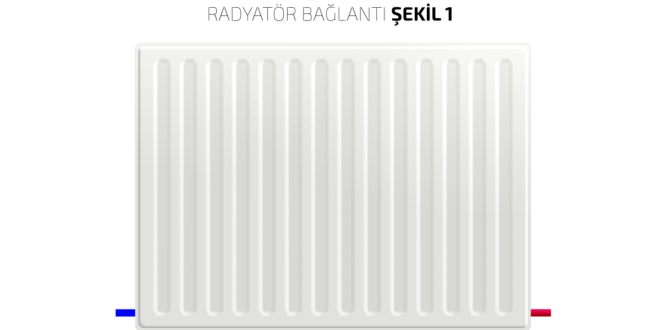
In this connection type, a reverse connection is impossible. It is considered the most effective connection. Hot water enters the radiator from the bottom, heats the entire unit, and exits from the top as it cools down.
Radiator Connection Type 2: Cross Connection
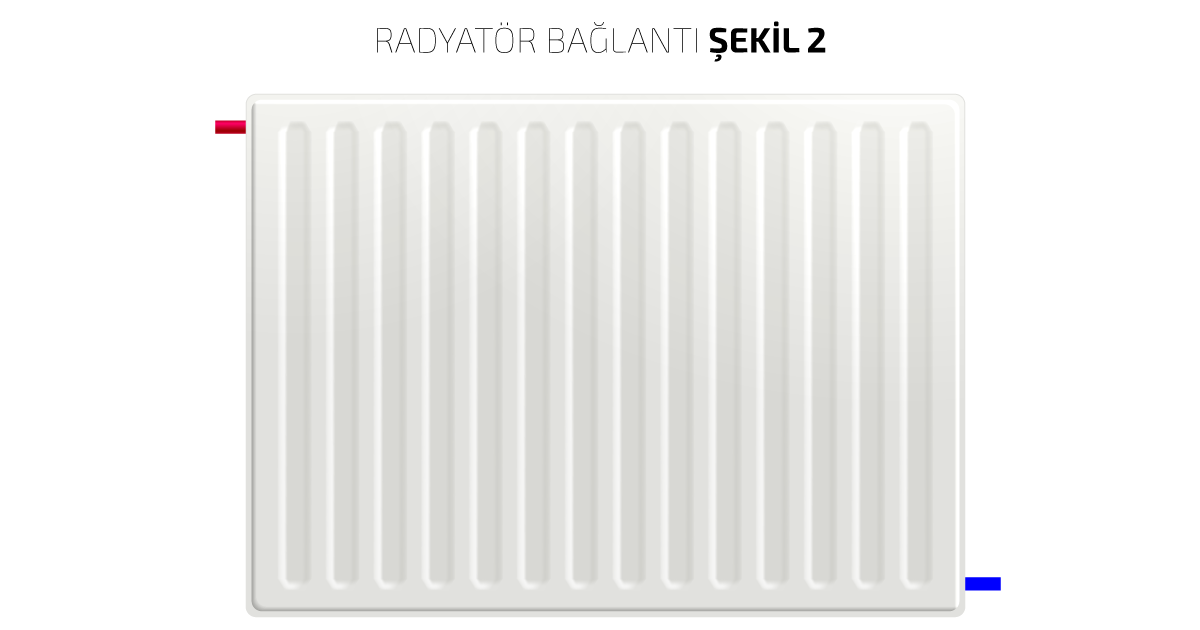
In the cross-connection setup, hot water enters from the top and cools down as it exits from the bottom. If the connection is reversed, hot water will enter from the bottom and exit from the top. To check for reverse connection, allow the radiators to cool down completely, then turn the boiler to a high setting. Place your hand on the valves of the radiator. If the bottom valve heats up first, your radiator is connected in reverse. If all radiators are reversed, the issue can be resolved by swapping the flow and return pipes at the boiler.
Radiator Connection Type 3
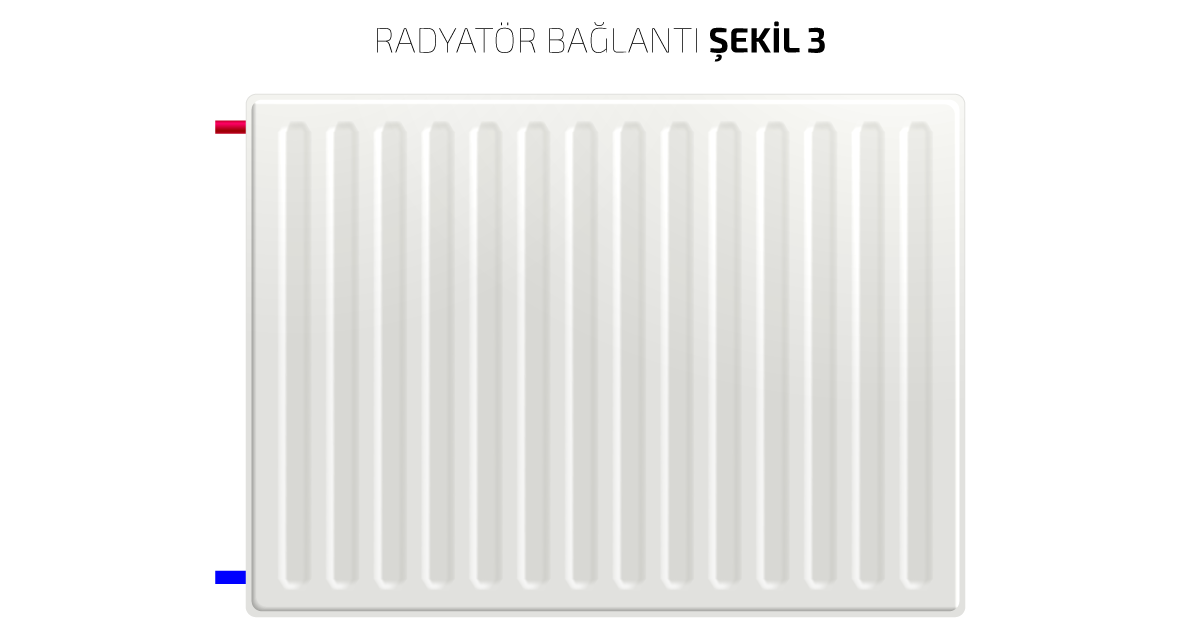
In this setup, valves are placed on both the top and bottom of the radiator. Hot water enters through the top valve, heats the radiator, and exits from the bottom as it cools. If the bottom valve heats up first, the connection is reversed. The side with the valve remains hot, while the other side stays cold or lukewarm. This issue is more common in long radiators. If all radiators are reversed, switching the flow and return pipes at the boiler will solve the problem.
Radiator Connection Type 4
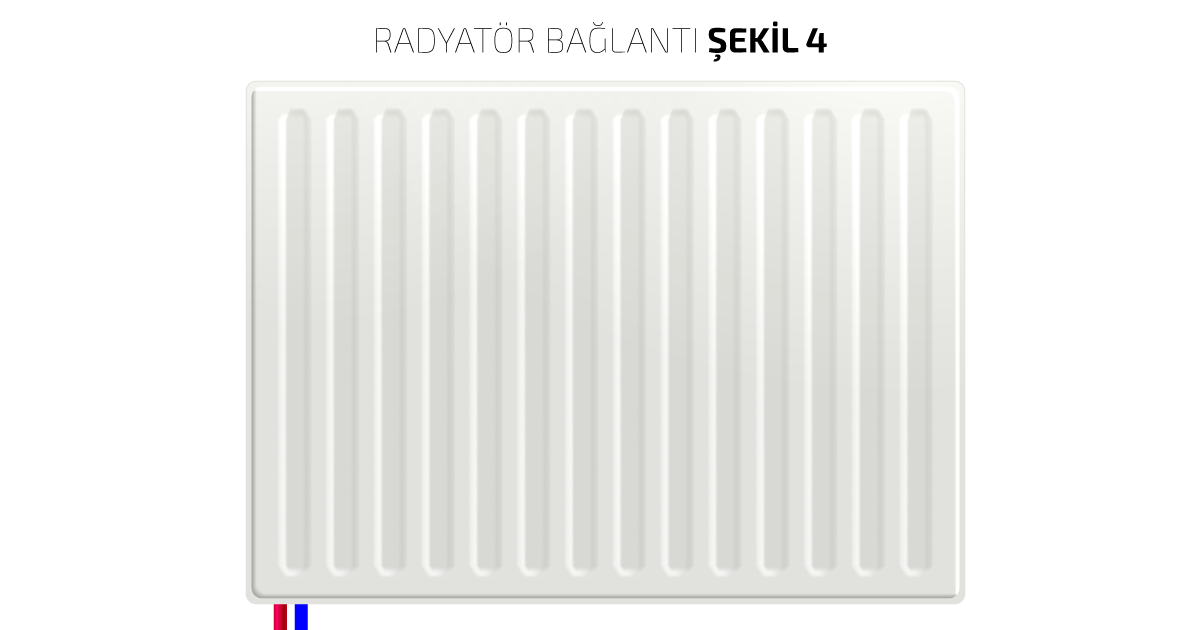
In some radiator models, both connections are at the bottom. It’s crucial to ensure that the hot supply and return lines are correctly connected. If reversed, the radiator won’t heat properly, and half of it will remain cold. The solution is to swap the flow and return pipes from the manifold.
Radiator Connection Type 5
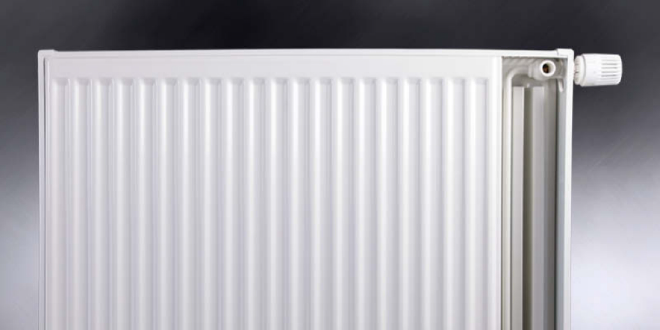
This connection type is identical to Type 4. Ensure the flow and return pipes are correctly connected for optimal heating.
Radiator Connection Type 6
This setup is similar to Type 3 and is used in some specific radiator models.
Protect Your Radiators with a Radiator Protector
By using a radiator protector, you can safeguard your system from limescale, sludge, and rust buildup, improving efficiency and saving on fuel costs. Have you read our related article on Radiator and Heating System Protection?
If you encounter problems with your radiators, share your experiences in the comments below. Have you tried the methods mentioned in the article? Are your radiators connected in reverse? We’re eager to hear your feedback!
For more details, visit: hasanalicolak.com.tr/kombi-tesisat-koruyucu